
Δείτε περισσότερα άρθρα μας στα αποτελέσματα αναζήτησης

Add Newmoney.gr on Google

Αποτελεί σκληρή πραγματικότητα κα τραγική ειρωνεία το γεγονός ότι μια περιοχή τόσο ευλογημένη με τους θησαυρούς των πρώιμων ανθρώπινων πολιτισμών, όσο αυτή της Μέσης Ανατολής, είναι ταυτόχρονα και εκείνη που μαστίζεται περισσότερο από τον πόλεμο.

Καθώς η βία απειλεί να εξολοθρεύσει μερικά από τα σπουδαιότερα μνημεία της ιστορίας, οι πολιτισμικές απώλειες είναι αναντικατάστατες.

Από το Ιράκ μέχρι τη Συρία και τη Λωρίδα της Γάζας, το CNN μετράει τις πληγές του πολιτισμού, βγάζοντας μεγάλο χαμένο της ιστορίας τον ίδιο τον άνθρωπο.

Δείτε 20 ανεκτίμητα μνημεία της Μέσης Ανατολής που καταστράφηκαν

Παλμύρα – Συρία
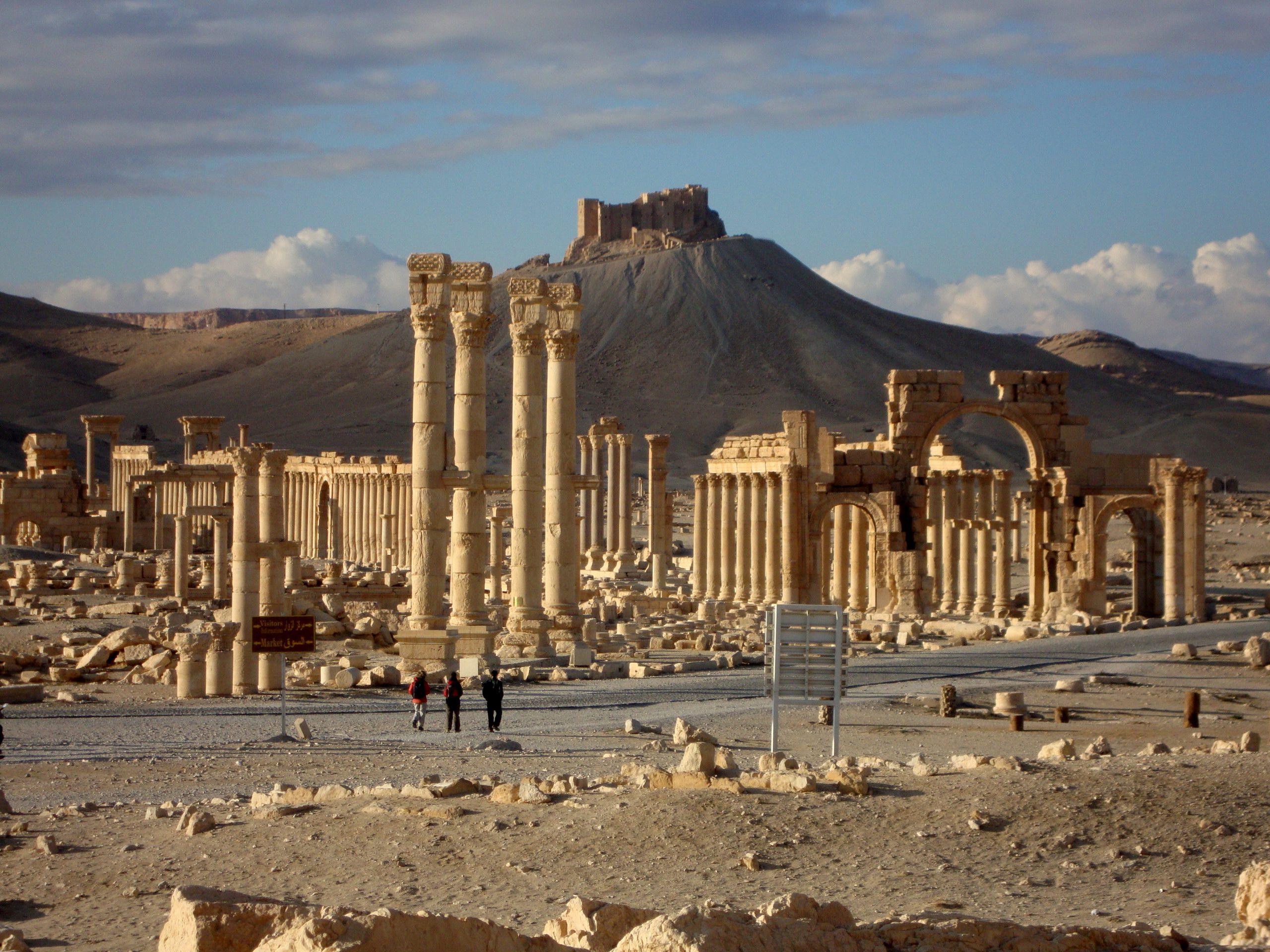
http://www.vocfm.co.za/wp-content/uploads/2015/05/syria-palmyra.jpg

Το μεγάλο τζαμί της Σαμάρα – Συρία

http://lh4.ggpht.com/-gF4hVd5vmOQ/U-RzKJE7pGI/AAAAAAAA0-c/8jFS6XvPCKk/great-mosque-samarra-2%25255B6%25255D.jpg?imgmax=800

Οι Βούδες του Μπαμιάν – Αφγανιστάν

http://www.wahdatnews.com/wp-content/uploads/2012/04/Bamyan-6.jpg

Παλιά πόλη Σαναά Υεμένη

Yemen's capital city of Sanaa has seen several <a href="http://www.cnn.com/2015/03/20/middleeast/yemen-violence/">suicide bombings</a> for which ISIS claimed responsibility, and air strikes by the Saudi-led coalition -- although it is unclear who is responsible to the latest damage. These have affected both the old fortified city -- inscribed on UNESCO's <a href="http://whc.unesco.org/en/list/385" target="_blank">World Heritage List</a> since 1986 -- and the archaeological site of the pre-Islamic walled city of Baraqish, causing "severe damage," <a href="http://news.yahoo.com/unesco-condemns-severe-bombing-damage-sanaa-old-town-163427150.html" target="_blank">according to UNESCO</a> itself.

Η αρχαία πόλη της Μπόσρα – Συρία

Continually inhabited for 2,500 years, and became the capital of the Romans' Arabian empire. The centerpiece is a magnificent Roman theater dating back to the second century that survived intact until the current conflict. Archaeologists have revealed the site is now severely <a href="http://ghn.globalheritagefund.com/uploads/documents/document_2107.pdf" target="_blank">damaged from mortar shelling</a>.

Το μεγάλο τζαμί στο Χαλέπι – Συρία

A world heritage site originally built in 715 by the Umayyad dynasty, ranking it among the oldest mosques in the world. The epic structure evolved through successive eras, gaining its famous minaret in the late 11th century. This was reduced to rubble in the Syrian civil war in 2013, along with serious damage to the walls and courtyard, which historians have described as the worst ever damage to Syrian heritage.

Τροχοί νερου της Χάμα, Συρία

https://kirst3njh.files.wordpress.com/2011/08/orontes_river_norias_in_hama_syria-other.jpg

Ακρόπολη του Χαλεπίου, Συρία

The fortress spans at least four millennia, from the days of Alexander the Great, through Roman, Mongol, and Ottoman rule. The site has barely changed since the 16th century and is one of Syria's most popular World Heritage sites. The citadel has been used as an army base in recent fighting and several of its historic buildings <a href="http://projects.nytimes.com/watching-syrias-war/footage-shows-damage-to-aleppo-citadel" target="_blank">have been destroyed</a>.

 Νερόμυλοι του Χαμά


These 20-meter wide water wheels were first documented in the 5th century, representing an ingenious early irrigation system. Seventeen of the wooden norias (a machine for lifting water into an aqueduct) survived to present day and became Hama's primary tourist attraction, noted for their groaning sounds as they turned. Heritage experts <a href="http://www.dgam.gov.sy/index.php?p=314&id=1374" target="_blank">documented several wheels</a> being burned by fighters in 2014.

Ακρόπολη του Χαλεπίου, Συρία

https://upload.wikimedia.org/wikipedia/commons/5/54/Citadel_of_Aleppo.jpg

Aleppo Souk, Συρία

The covered markets in the Old City are a famous trade center for the region's finest produce, with dedicated sub-souks for fabrics, food, or accessories. The tunnels became the scene of fierce fighting and many of the oldest are<strong> </strong>now damaged beyond recognition, which Unesco has<strong> <a href="http://whc.unesco.org/en/news/940/" target="_blank"></strong>described as a tragedy</a>.

Γέφυρα Deir Ez-zor, Συρία

This French-built suspension bridge was a popular pedestrian crossing and vantage point for its views of the Euphrates River. It became a key supply line in a battle for the city, and <a href="http://www.syriadeeply.org/articles/2013/11/2595/crossing-bridge-death-deir-ezzor/" target="_blank"><strong>collapsed under shelling</strong>.</a> Deir Ez-zor's Siyasiyeh Bridge was also destroyed.

Nimrud, Ιράκ

The<strong> </strong>ancient Assyrian city around Nineveh Province, Iraq was home to countless treasures of the empire, including statues, monuments and jewels. Following the 2003 invasion the site<strong> <a href="http://www.theguardian.com/world/2003/apr/30/internationaleducationnews.arts" target="_blank"></strong>has been devastated by looting</a>, with many of the stolen pieces finding homes in museums abroad.

Crac des chevaliers, Συρία

The Crusader castle from the 11th century survived centuries of battles and natural disasters, becoming a World Heritage site in 2006 along with the adjacent castle of Qal'at Salah El-Din. The walls were severely damaged by <a href="http://ghn.globalheritagefund.com/uploads/documents/document_2107.pdf" target="_blank">regime airstrikes and artillery in 2013</a>, and rebels took positions within it.

Τάφος του Jonah, Ιράκ

The purported resting place of biblical prophet Jonah, along with a tooth believed to be from the whale that consumed him. The site dated to the 8th century BC, and was of great importance to Christian and Muslim faiths. It was<a href="http://edition.cnn.com/2014/07/24/world/iraq-violence/"> entirely blown up by ISIS militants in 2014</a> as part of their campaign against perceived apostasy.

Khaled Ibn Walid, Μόσχα, Ρωσία

Among Syria's most famous Ottoman-style mosques, which also shows <a href="http://www.metmuseum.org/toah/hd/maml/hd_maml.htm" target="_blank">Mamluk</a> influence through its light and dark contrasts. The vast site became a hub of the battle for Homs, itself a front-line of the conflict. The sacred mausoleum has <a href="http://www.apsa2011.com/index.php/en/provinces/homs/monuments/634-homs-state-of-the-bombing-of-khalid-ibn-al-walid-mosque-29-06-2013.html" target="_blank">been completely destroyed<strong></a>,</strong> and much of the interiors burned.

Αρμενικό μουσείο γενοκτονίας, Συρία

Memorial site to the <a href="http://www.armenian-genocide.org/genocide.html" target="_blank">1.5 million killed between 1915</a> and 1923, the Deir Ez-zor became a yearly destination for pilgrims from around the world. The site included a church, museum, and fire that burned continuously. <a href="http://conflictantiquities.wordpress.com/2014/09/27/iraq-syria-islamic-state-destruction-deir-ez-zor-armenian-genocide-memorial-church/" target="_blank">The complex was destroyed by ISIS in 2014<strong></a>.</strong>

Κυρήνη, Λιβύη

A key city for the Greeks and Romans, established in 630 BC. Famed as the basis for enduring myths and legends, such as that of the huntress heroine of the same name and bride of Apollo. The ruins were some of the best preserved from that period, but in the wake of Libya's revolution, <a href="http://www.thetimes.co.uk/tto/news/world/middleeast/article3856669.ece" target="_blank">vast tracts have been bulldozed</a> including its unique necropolis complex.

Μουσείο Ισλαμικής τέχνης, Αίγυπτος

Home to one of the world's most impressive collections, with over 100,000 pieces that cover the entirety of Islamic history. The Cairo site was first built in 1881, the museum recently underwent an eight-year multi-million dollar renovation. Shortly after re-opening, a car bomb targeting a nearby police building <a href="http://www.bbc.co.uk/news/world-middle-east-25877201" target="_blank">caused catastrophic damage</a> and forced the museum to close again.

Quaid e azam residency, Πακιστάν

This 121-year-old wooden building, humble but elegant, was home to the nation's first governor general Muhammed Ali Jinnah for the last phase of his life. The residency <a href="http://edition.cnn.com/2013/06/15/world/asia/pakistan-founder-home-attacked/index.html?hpt=hp_t2">was attacked with rocket fire by a separatist group in 2013</a>, and almost completely demolished. A new structure is being built on the site.

Τζαμί Al- Omari, Γάζα

Ancient monument in the heart of Jabalya's old town dates back to the Mamluk  Era. The walls, dome and roof were <a href="http://www.maannews.net/eng/ViewDetails.aspx?ID=717666" target="_blank">destroyed by Israeli airstrikes </a>during the recent fighting in Gaza, along with dozens more historic sites.

Old Beriut, Λίβανος

A 15-year civil war of incredible brutality, successive battles with Israel, and sweeping urban development has robbed the 'Paris of the Middle East' of much of its visual lustre. Once known for its landscape of swaggering Ottoman, French and Art Deco architecture, officials say just 400 of 1200 protected historic buildings remain.

The fortress spans at least four millennia, from the days of Alexander the Great, through Roman, Mongol, and Ottoman rule. The site has barely changed since the 16th century and is one of Syria's most popular World Heritage sites. The citadel has been used as an army base in recent fighting and several of its historic buildings <a href="http://projects.nytimes.com/watching-syrias-war/footage-shows-damage-to-aleppo-citadel" target="_blank">have been destroyed</a>.